

What is Valley Fever
Coccidiomycosis, or Valley Fever as it is more commonly known, is a soil-borne fungus found in the desert Southwest. The fungus requires high heat, low annual rainfall, and low altitudes (Lower Sonoran Life Zone) to survive. During the summer months, the fungus lives 6-8 inches below the surface. After periods of rain, the organism begins growing in the upper layers of the soil and releases spores. The spores are picked up by wind storms and are spread over great distances. Most patients develop the disease in the weeks to months following the monsoon rains, but year round infections can occur. Many people and pets living in areas where Valley Fever is prevalent may become infected. Most infections resolve on their own without treatment. Only a small number of animals and people become sick with the disease.
Infection
Infection occurs after inhaling the spores. Most dogs will begin coughing within 1 to 3 weeks. Small focal pneumonias develop first. If the immune system does not clear the infection, it then spreads to the lymph nodes in the chest within about 10 days. Infections of the bones, eyes, heart, brain, spinal cord, and other internal organs can also occur within 1 to 4 months.

Symptoms
Symptoms of Valley Fever are varied as the fungus can spread to many areas within the body. A dry hacking cough is often noted initially. Fever and decreased appetite generally accompany the cough.
- Lethargy
- Fever
- Dry hacking cough
- Decrease in appetite
- Limping or bone pain
- Vision problems
- Seizures or behavioral changes
- Draining or non-healing wounds
In patients with the heart form of the disease, fluid can accumulate around the heart causing weakness and lethargy. A large bloated belly may develop secondary to Valley Fever of the heart.

Diagnosis
The diagnosis of Valley Fever is based on a patient’s symptoms and blood tests known as titers. A titer is designed to measure the body’s response to the Valley Fever organism.
The test is able to detect active infection in many patients. However, it can be falsely negative in approximately 30% of dogs. False negatives may result from a very early infection or lack of immune response to the organism.
Certain breeds like Golden Retrievers, Boxers, and Daschunds seem to mount a very poor response to the organism and often have severe infections with false negative titer results.
False positive titers are also possible and can occur in patients that have previously had Valley Fever but have successfully recovered.
X-rays are helpful in the diagnosis of an active infection. X-rays of the chest in a coughing patient or x-rays of a leg in a limping patient are helpful in identifying an active infection with Valley Fever.
Advanced diagnostics, may be indicated when traditional testing has been inconclusive. Advanced diagnostics that aid in the diagnosis of Valley Fever include:
-Ultrasound guided needle biopsies of abnormal lesions may confirm the suspicion of Valley Fever.
-Bronchoscopy, a procedure where a small camera is inserted into the airway and lungs, can show enlarged lymph nodes, collapsed airways, and pus that can occur with Valley Fever pneumonia. Samples can be collected during the procedure to help make a positive diagnosis of Valley Fever.
-Ultrasounds of the heart may be indicated in patients that are extremely weak and have bloated bellies.
Treatment
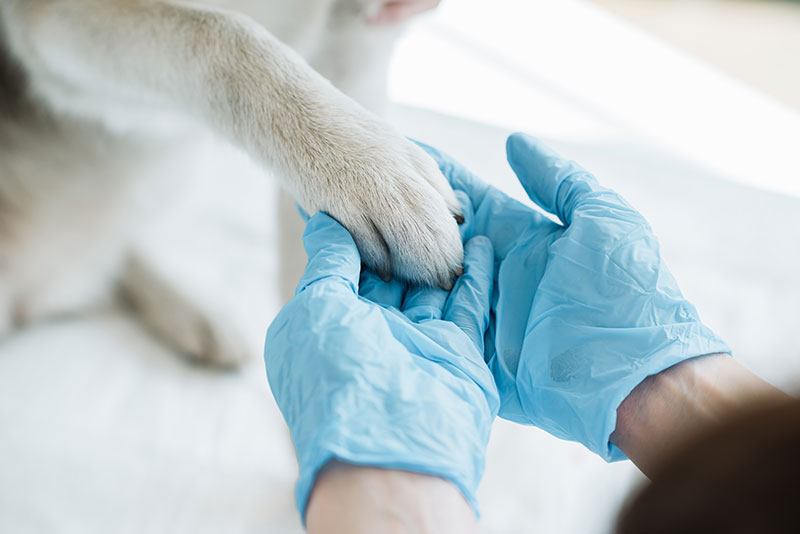
Antifungal medications commonly used to treat Valley Fever include:
- Fluconazole
- Itraconazole
- Ketoconazole
Fluconazole has been the mainstay of treatment in humans and animals for a number of years. Fluconazole works primarily by preventing the Valley Fever organism from reproducing. It still relies on the immune system to clear the overall infection. Fluconazole has the added ability of being able to enter the brain and spinal cord to treat patients with neurological Valley Fever. Toxicity is rare, but vomiting, increased water consumption, elevated liver values, and skin rashes are known as potential side effects. Liver toxicity may occur in some patients. Itraconazole and ketoconazole are closely related compounds that have been used in some patients that cannot tolerate fluconazole.
Second generation oral antifungals have been developed in people, but have not been widely studied in animals. In general, the second generation oral medications are more effective, but are also significantly more expensive. The specialists at Valley Fever Treatment Center for Animals are currently in the process of evaluating patients to be included in a study with these newer medications, particularly in patients with severe disease where there has been little to no response to fluconazole.
Additional supportive medications are sometimes warranted in patients with Valley Fever. Anti-inflammatories or steroids help alleviate fevers. Appetite stimulants are also valuable in patients that are not eating.
Monitoring Valley Fever titers, white blood cell counts, and liver values during the course of treatment is essential to ensure a response to therapy and identify potential complications.
Response to Therapy
Therapy should be administered for a minimum of 6 months and may be as along as a year or more. In patients that are unable to clear the organism, therapy can be lifetime. There is little known about the recurrence rate of Valley Fever in dogs and cats. Recurrences are common in patients that are not treated for a sufficient period of time. Blood work and x-rays should be followed in most patients to determine the length of therapy. Therapy should be continued for a minimum of 3 months beyond when the test results are normal. Based on current information, it is thought that animals can acquire the infection again in limited circumstances.

Prevention
A vaccine for Valley Fever is not commercially available at this time. Prevention against infection is best achieved by limiting an animal’s exposure to Valley Fever.
The following suggestions are advised:
- Walk dogs on city streets or parks
- Avoid running or walking dogs in the desert
- On windy days and during dust storms, keep windows closed and animals indoors
- Landscape yards with grass or rocks
- Limit dogs from digging in the dirt
Dogs that dig in the dirt are at substantial increased risk for acquiring Valley Fever.

Human Health Risks
Valley Fever is generally not contagious between animals or from animals to people. People and animals living in the same environment are both at risk for developing infection by inhaling spores.
There is a small risk that animals can transmit the infection from a draining or non-healing wound. Good hygiene practice should always be used when cleaning a wound thought to be caused by Valley Fever.